Khajuraho – The Architectural Jewel of India - Travel Torq
-
 By Bhaskar
 - January 30, 2026
- 0 Comments
- Uncategorized
 By
By India is a land of timeless wonders, where history, art, and spirituality blend seamlessly. Among its many architectural marvels, Khajuraho stands out as a destination that fascinates travelers from across the world. Famous for its magnificent temples, intricate stone carvings, and deep cultural symbolism, Khajuraho is truly the Architectural Jewel of India.
Located in the heart of Madhya Pradesh, Khajuraho is a UNESCO World Heritage Site and a must-visit destination for history lovers, architecture enthusiasts, photographers, and curious travelers alike. In this blog, Travel Torq takes you on a detailed journey through Khajuraho—its history, temples, best attractions, travel tips, and why it deserves a place on your travel bucket list.
A Glimpse into the History of Khajuraho
Khajuraho dates back to the 10th and 11th centuries, built during the reign of the Chandela dynasty. At its peak, the city was home to over 85 temples, of which around 25 temples have survived the test of time.
These temples were not merely places of worship; they were masterpieces of stone architecture representing the ideals of life—dharma (duty), artha (prosperity), kama (desire), and moksha (liberation). Contrary to popular belief, the famous erotic sculptures form only a small portion of the carvings. Most artworks depict daily life, music, dance, mythology, warfare, and divine beings.
Hidden for centuries under dense forests, Khajuraho was rediscovered in 1838 by a British engineer, bringing this forgotten jewel back into the spotlight.
Why Khajuraho Is Called the Architectural Jewel
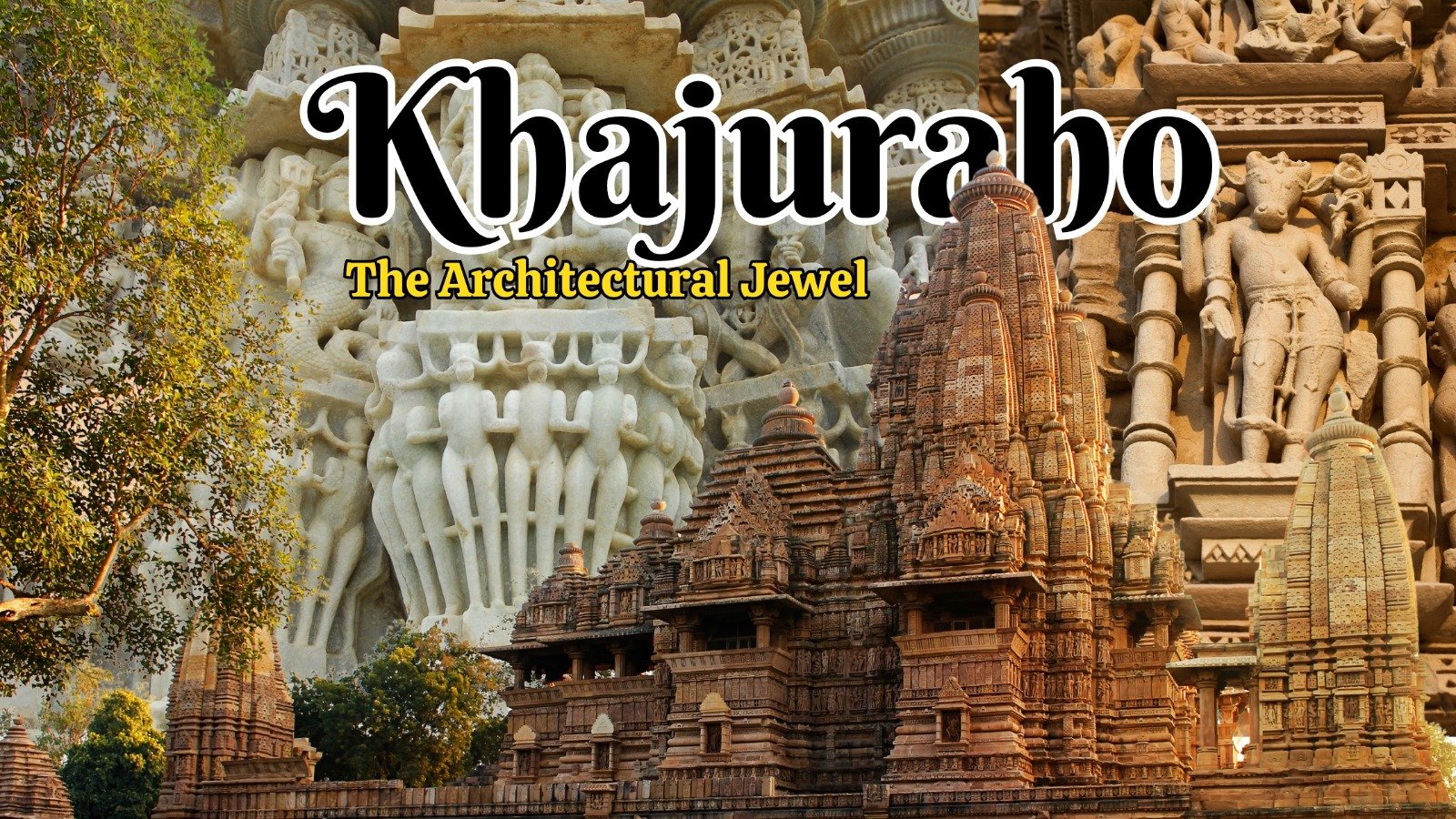
What makes Khajuraho unique is its Nagara-style temple architecture, precision stone carving, and artistic expression. Every sculpture tells a story—etched with remarkable detail despite being carved without modern tools.
Architectural Highlights
Perfectly symmetrical temple layouts
Elevated platforms (jagati) for circumambulation
Towers (shikharas) symbolizing Mount Kailash
Sculptures carved from sandstone blocks joined without mortar
The temples are not just monuments; they are living art galleries carved in stone.
Major Temple Groups of Khajuraho
1. Western Group of Temples
This is the most famous and well-preserved complex.
Key Temples:
Kandariya Mahadev Temple – The largest and most ornate temple, dedicated to Lord Shiva
Lakshmana Temple – Dedicated to Lord Vishnu
Devi Jagdamba Temple
Chitragupta Temple – Dedicated to the Sun God
These temples are known for their elaborate sculptures and spiritual symbolism.
2. Eastern Group of Temples
Primarily Jain temples, showcasing religious harmony.
Notable Temples:
Parsavanatha Temple
Adinatha Temple
The carvings here focus more on spiritual teachings, celestial beings, and nature.
3. Southern Group of Temples
Less crowded yet equally mesmerizing.
Must-See Temples:
Dulhadev Temple
Chaturbhuj Temple
These temples offer a peaceful experience and are perfect for photography.
Beyond Temples: Things to Do in Khajuraho
Khajuraho is not just about temples; the town offers cultural and natural experiences too.
1. Light and Sound Show
Held every evening at the Western Group of Temples, this show narrates the history of Khajuraho with stunning visuals and music.
2. Khajuraho Dance Festival
A globally renowned event celebrating Indian classical dance forms like Bharatanatyam, Kathak, Odissi, and Kuchipudi against the backdrop of the temples.
3. Archaeological Museum
A great place to understand the history and evolution of temple architecture.
4. Nature Walks & Photography
Surrounded by greenery, Khajuraho offers serene walking trails and incredible sunrise and sunset views.
Best Time to Visit Khajuraho
The ideal time to visit Khajuraho is between October and March.
Winter (Oct–Feb): Pleasant weather, perfect for sightseeing
Summer (Mar–Jun): Hot but manageable for short visits
Monsoon (Jul–Sep): Lush greenery, fewer crowds, scenic beauty
For cultural lovers, visiting during the Khajuraho Dance Festival (February) is highly recommended.
How to Reach Khajuraho
Khajuraho is well-connected by air, rail, and road.
By Air: Khajuraho Airport (direct flights from Delhi, Varanasi)
By Train: Khajuraho Railway Station
By Road: Well-connected to Jhansi, Satna, and Orchha
Travel Torq can help you plan seamless transportation and customized itineraries for a stress-free journey.
Local Food & Shopping in Khajuraho
Must-Try Local Cuisine
Dal Bafla
Poha
Lassi
Traditional vegetarian thalis
Shopping Highlights
Handcrafted stone sculptures
Brass artifacts
Tribal paintings
Local handicrafts
Travel Tips for Khajuraho Visitors
Wear comfortable clothing and walking shoes
Respect temple guidelines and cultural sentiments
Hire a local guide for deeper historical insights
Carry water and sun protection
Visit early morning or late afternoon for the best lighting and fewer crowds
Why Visit Khajuraho with Travel Torq
At Travel Torq, we believe travel should be meaningful, comfortable, and memorable. Whether you’re a solo traveler, a couple, a family, or a culture enthusiast, we design custom Khajuraho tour packages that match your interests and budget.
What We Offer
Personalized travel itineraries
Comfortable hotel stays
Guided heritage tours
Cultural experiences
End-to-end travel assistance
Explore Khajuraho not just as a tourist, but as a storyteller—walking through centuries of art, devotion, and human expression.
Conclusion
Khajuraho is more than a destination—it is an experience that celebrates creativity, spirituality, and architectural brilliance. From its awe-inspiring temples to its cultural richness, every corner of Khajuraho whispers stories of India’s glorious past.
If you’re planning a heritage escape that combines history, art, and soul-stirring beauty, Khajuraho – The Architectural Jewel should be at the top of your list.
Let Travel Torq turn your Khajuraho journey into a timeless memory.